Web design for law firms
Nobody reads a solicitor's website for fun. They arrive stressed, compare three firms in one evening, and trust the one that made things clearest. Here is how to be that one.
Nobody reads a law firm's website for pleasure. The person on your homepage at eleven at night is dealing with a dismissal, a divorce, a dispute or a death in the family, and they have three firms open in three tabs. They are not browsing. They are checking. That changes what the site has to be: not a brochure, a credibility document read under stress.
What a worried visitor actually checks
Three things, roughly in this order.
Who you are. Real names, real faces, real photographs. A firm that hides its people behind stock imagery of handshakes and glass towers reads as evasive, which is a poor look in a profession built on trust.
Whether you handle cases like theirs. Not "a full-service offering across contentious and non-contentious matters". Their situation, named in the words they would use for it themselves.
What happens next. What a first conversation costs, what they should bring, roughly how long things take, and who they will actually be dealing with. Uncertainty is the thing they came to get rid of. A site that adds more of it has failed before anyone judges the design.
Everything else, the awards, the heritage, the values statements, is decoration until those three questions are answered.
Why plain English wins
Legal writing is precise for good reasons. Legal marketing borrowed the stiffness and left the precision behind. A practice-area page that reads like a statute tells a prospective client nothing except that reading it was hard work, and they still have two other tabs open.
The counterintuitive part is that plain English reads as more senior, not less. Confident specialists explain things simply. It is anxious generalists who hide behind "bespoke client-centric solutions". Write the site the way a good solicitor talks in a first meeting: clearly, calmly, and without pretending the process is simpler than it is.
The structure that does the work
Practice-area pages written for clients, not lawyers
Name the page after the problem, not the department. "Unfair dismissal" reaches a reader that "Employment law services" never will, and it is also what they typed into the search bar. Each page should answer four questions in order: is this my situation, what does the process look like, what will it cost, and who will handle it. One page per real service, not one page per internal team.
Solicitor bios that earn trust
After the homepage, bios are usually where the decision gets made, because clients hire a person, not a firm. A good bio is short: a photograph that looks like the human in question, the cases they actually take, a plain paragraph on how they work, and a direct way to reach them. Two hundred words that answer "do I want this person on my side" beat two thousand on directory listings and panel memberships.
Fees, handled like an adult
The SRA has transparency expectations around publishing price information for certain services. The specifics evolve, and I am a web designer, not a compliance adviser, so the exact requirements are worth checking with your regulator. What I can tell you from the design side is that fee pages built grudgingly look grudging. A buried PDF and a "contact us for a quote" on a page you were required to publish send exactly the wrong message. State what a first meeting costs, show fixed fees where they exist and honest ranges where they do not, and the page becomes a trust signal instead of a liability.
A process built for risk-averse firms
Law firms are professionally allergic to open-ended commitments, and fair enough. The way I work maps onto that rather well.
- One fixed quote, agreed in writing before anything starts, that never moves. The pricing page sets out exactly what each tier includes.
- Nothing gets built until the design is formally signed off, so the partners approve precisely what will exist before it exists.
- The whole project runs through your own client portal: live previews at every stage, comments pinned directly on the design, and a record of every approval. A paper trail, in other words, which I suspect a law firm will appreciate more than most.
An honest note on experience
I have not built for a law firm yet. My clients so far are an affordable housing platform, a mortgage adviser matching service and a film studio, and the work is there to judge. The mortgage project is the relevant one here: visitors arriving anxious about something serious and expensive, and a page structured entirely around their worries rather than the company's talking points. That discipline is exactly what a law firm site needs, and it transfers. What I will not do is claim a legal specialism I do not have, which, now I think about it, is rather the point of this page.
What it costs and how long it takes
A bespoke marketing site starts from £2,500. A conversion-focused build, with a strategy workshop, copywriting and technical SEO foundations, starts from £5,000, and for most established firms that is the sensible tier because the site has a commercial job to do. Client portals and anything with a login are scoped individually after a proper discovery conversation.
A typical marketing-site build takes around three weeks from kickoff to launch. A firm with many practice areas takes longer, and you will have a real date before work begins, not a hopeful one.
If you want a number before a conversation, the website cost calculator takes about a minute. And once the site is live, the Live care plan at £150 a month keeps it monitored, secure and quietly maintained, with a handful of content changes handled each month, so nobody in the firm has to think about it.
Good questions
Your firm is, and the project is built to respect that. Nothing goes live without your formal sign-off in the portal, so your compliance lead approves every page before it is published. I design and build websites, I do not give legal or regulatory advice, so specific wording requirements are worth checking with your regulator.
For certain services the SRA has transparency expectations around published price information, and the details change, so confirm the current position with your regulator or compliance lead. Whatever the rules require, a fee page designed properly reads as confidence rather than small print, and it answers the question every visitor arrives with.
A photograph that looks like the actual person, a plain description of the cases they take, a sentence or two on how they work, and a direct way to contact them. Prospective clients are choosing a person, not a letterhead, so the bio's only job is answering whether they want that person on their side.
A typical marketing site takes around three weeks from kickoff to launch. A firm with many practice areas and a lot of content takes longer. Because nothing is built until the design is formally signed off, you get a real date before the project starts, not a hopeful one.
A bespoke marketing site starts from £2,500. A conversion-focused build with a strategy workshop, copywriting and technical SEO foundations starts from £5,000. Client portals and anything with a login are scoped individually after a discovery conversation. The price is fixed in writing before work starts and never moves.
Other recent builds

Red Moss
Portfolio siteA bold, cinematic portfolio site for a London film duo making original comedy and drama for the screen.
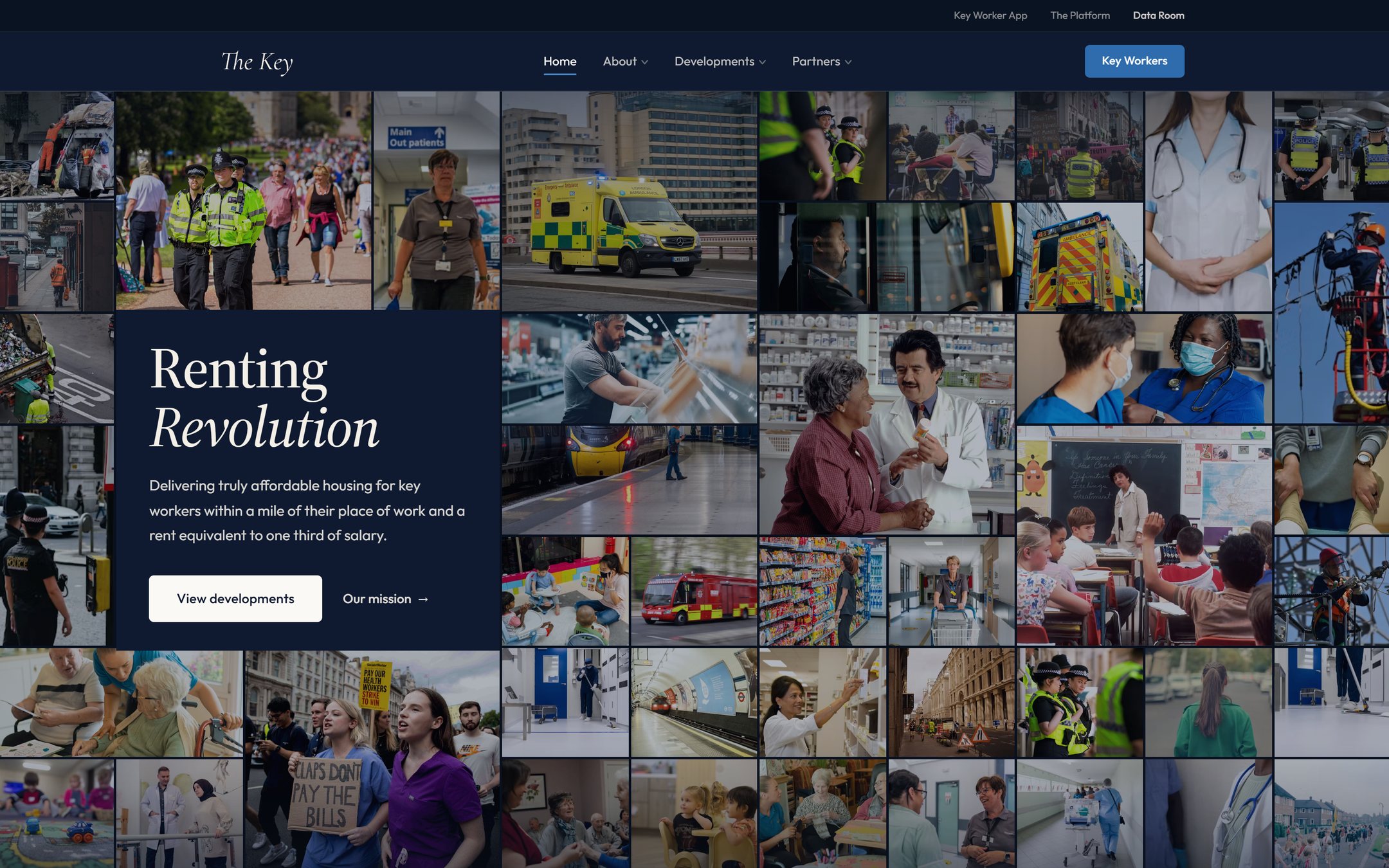
The Key
Marketing site & data roomA brand-led marketing site and a secure investor data room for an affordable-housing venture, with a live demand map and an interactive underwriting model.
Tell me what
you're building.
Thirty minutes, and you'll leave with a clear price and a next step. No pressure, no jargon.
Book a slot instantly, or email me and get a reply the same working day