Web design for clinics and private practices
Patients arrive anxious, often at 11pm, having already Googled the worst. Your website's job is to be the calm, clear thing they find next.
Nobody browses clinic websites for fun. People arrive worried, often late at night, having already read three alarming things about their symptoms. That context should shape every decision on the site, and it usually shapes none of them. Most private practice websites read like brochures: stock photos of smiling models, vague talk of excellence, and a phone number that only works in office hours.
The honest bit first
I have not built a website for a clinic, and you should be wary of anyone in my position who claims a specialism in everything. What I have built is BrokerMatch, a landing experience for a service matching UK borrowers with mortgage advisers, where the design brief was making a stressed visitor feel calmer with each scroll rather than more sold to. And The Key, an affordable housing platform that had to speak to nurses and teachers on one track and institutional partners on another. Different industries, same underlying craft: work out what an anxious visitor is actually worried about, then answer it plainly, in the right order. That craft transfers. The clinical specifics are what the discovery call is for.
The four questions every patient arrives with
Who would be treating me. What happens at the first appointment. What will it cost. How do I book. That is the whole brief, and it is remarkable how many clinic websites answer none of them on the first screen.
Real people, not stock photos
A patient choosing a private clinic is choosing a person. Real photographs of your actual clinicians, their genuine qualifications and registration details, and a couple of human sentences about each of them beat any amount of polished copy about excellence in care. If your service is regulated, how you display your CQC registration and ratings (in England, or the equivalent elsewhere in the UK) is worth checking as part of the build. I make sure that information has a proper, findable home on the site. I do not give regulatory advice, and neither should your web designer.
Explain the first appointment like you would to a nervous friend
The "what actually happens when I come in" page is the one a worried patient reads three times. How long it takes, what to bring, whether there is an examination, when results come back. Plain English, short sentences, no jargon. It costs nothing to write and it is usually missing entirely.
Show prices where you are allowed to
Where your regulations and insurers allow it, publish a consultation fee or clear "from" prices for common treatments. Uncertainty about cost makes people hesitate, and silence on prices reads as "more than you can afford". A page that states its numbers plainly says something about how the clinic will treat you in person too.
Booking friction is the silent killer
The decision to finally book a private appointment tends to happen at odd hours, after weeks of putting it off. If the only next step is "call us between nine and five", the moment passes and the tab gets closed. The fix is rarely exotic: an online route that works at 11pm, whether that is an integration with the diary system you already run or a short, well-designed enquiry form with a stated response time you actually keep.
The form itself deserves more attention than it usually gets. Every extra field is a place to give up, and on a clinic site every field is also a privacy question.
Privacy as a feature, not a checkbox
Done properly, privacy is something a clinic website can be quietly proud of rather than a policy buried in the footer. In practice that means forms that collect only what is needed to arrange an appointment and nothing clinical. Form data that lands somewhere sensible, not in a marketing tool's spreadsheet. Analytics that do not follow patients around: I run cookieless analytics on my own site, no consent banner, and I take the same approach when a client build needs analytics. And a firm line that anything resembling a patient record belongs in your clinical system, not on the website. None of this is legal advice. All of it is buildable, and patients notice the difference between a site that respects them and one that greets them with a wall of cookie toggles.
Accessibility is not optional for this audience
Every website should be accessible. A healthcare website has no excuse, because its audience is precisely who accessibility exists for: older patients, people with low vision or a tremor, people navigating by screen reader, and everyone whose concentration is narrowed by pain or worry. Proper contrast, readable type, keyboard-friendly forms, reduced-motion support, and language a stressed person can parse first time. This is baseline in every build I do, not a line item.
A process that suits a clinical mindset
Clinics run on governance: documented decisions, named responsibility, formal sign-off. My process works the same way, which is less a coincidence than good practice looking similar wherever it appears. The price is fixed and agreed in writing before work starts, and the pricing page sets out exactly what each tier includes. The whole build runs through your own client portal, where you watch live previews, pin feedback directly on the design, and formally approve each stage before anything gets built. If anyone ever asks who approved the website copy and when, there is an answer with a timestamp on it.
Cost, timeline, and where to start
A bespoke marketing site for a practice starts from £2,500. A conversion-focused build, with copywriting and technical SEO foundations, starts from £5,000, and a straightforward diary integration usually fits inside it as the practical automation feature. Patient portals, logins and deeper integrations are platform work, scoped individually after a proper discovery conversation. A typical marketing site takes around three weeks from kickoff to launch.
If you are still weighing it up, ten minutes with the project brief builder gets the essentials out of your head and into a shape I can actually price. A thirty-minute call turns that into a fixed quote that never moves.
Good questions
Forms collect the minimum needed to arrange an appointment, nothing clinical, and the data lands somewhere sensible rather than in a marketing tool. Anything resembling patient records belongs in your clinical system, not on a website. Before you sign anything off, I set out exactly where every piece of form data goes.
Yes. The usual route is integrating the diary or practice management system you already use, designed so booking is one obvious step from any page, at any hour. If you need a custom booking flow with logins, that is a platform project and is scoped individually after discovery.
Where your regulations and insurance arrangements allow it, I would design for it: a consultation fee or clear 'from' prices for common treatments. Silence about cost makes an anxious patient assume the worst, and a plain answer is a kindness. What you are permitted to publish is a question for you and your compliance side, not for me.
Accessible by default: proper contrast, readable type sizes, forms that work with a keyboard, screen reader support, and motion that respects reduced-motion settings. For a healthcare audience this is part of the job, so it is included in every build rather than quoted as an extra.
A bespoke marketing site starts from £2,500. A conversion-focused build starts from £5,000, and a straightforward diary integration usually fits inside it as the practical automation feature. Patient portals and anything with logins are scoped individually. A typical marketing site takes around three weeks, and the price is fixed in writing before work starts.
Other recent builds

Red Moss
Portfolio siteA bold, cinematic portfolio site for a London film duo making original comedy and drama for the screen.
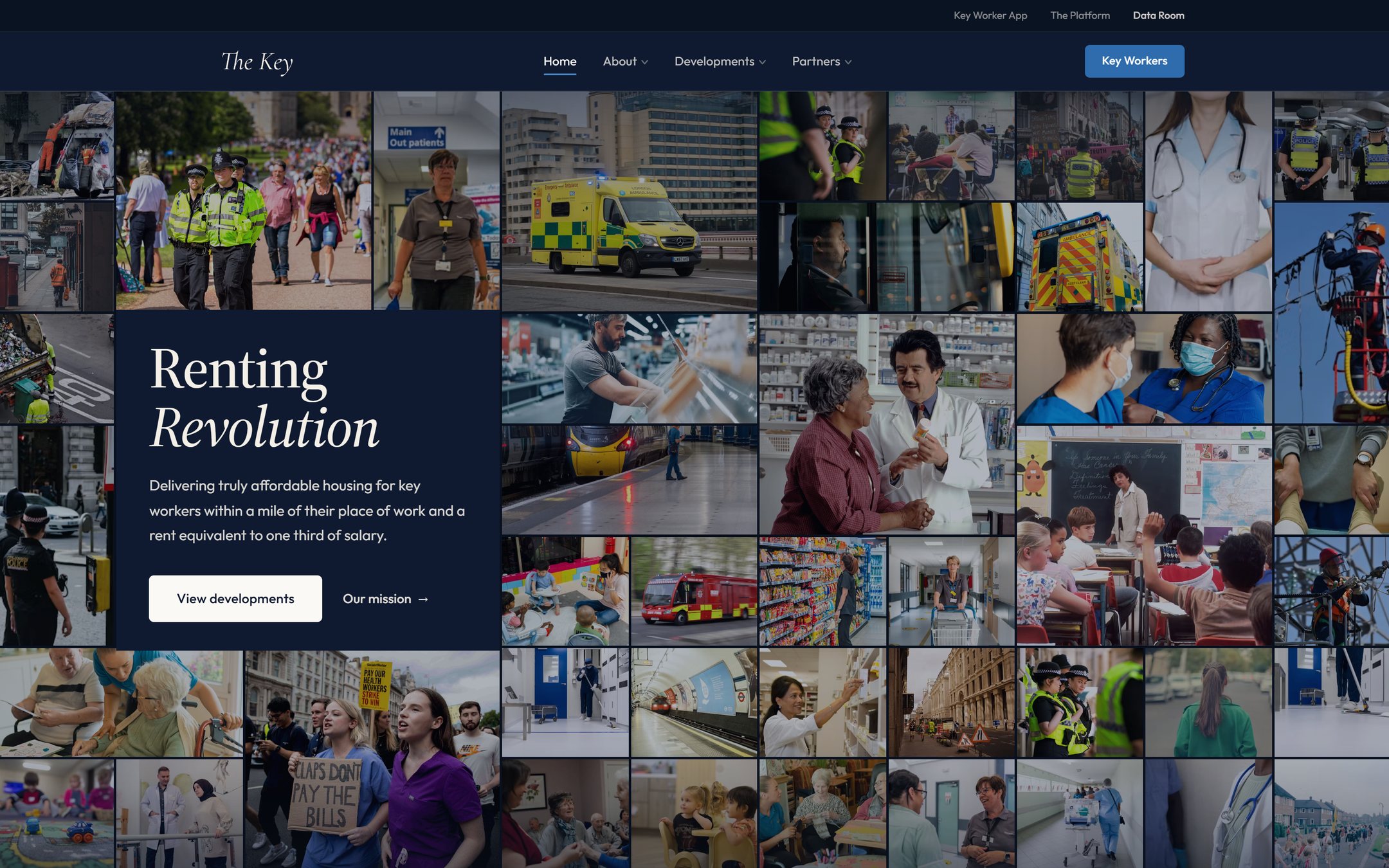
The Key
Marketing site & data roomA brand-led marketing site and a secure investor data room for an affordable-housing venture, with a live demand map and an interactive underwriting model.
Tell me what
you're building.
Thirty minutes, and you'll leave with a clear price and a next step. No pressure, no jargon.
Book a slot instantly, or email me and get a reply the same working day